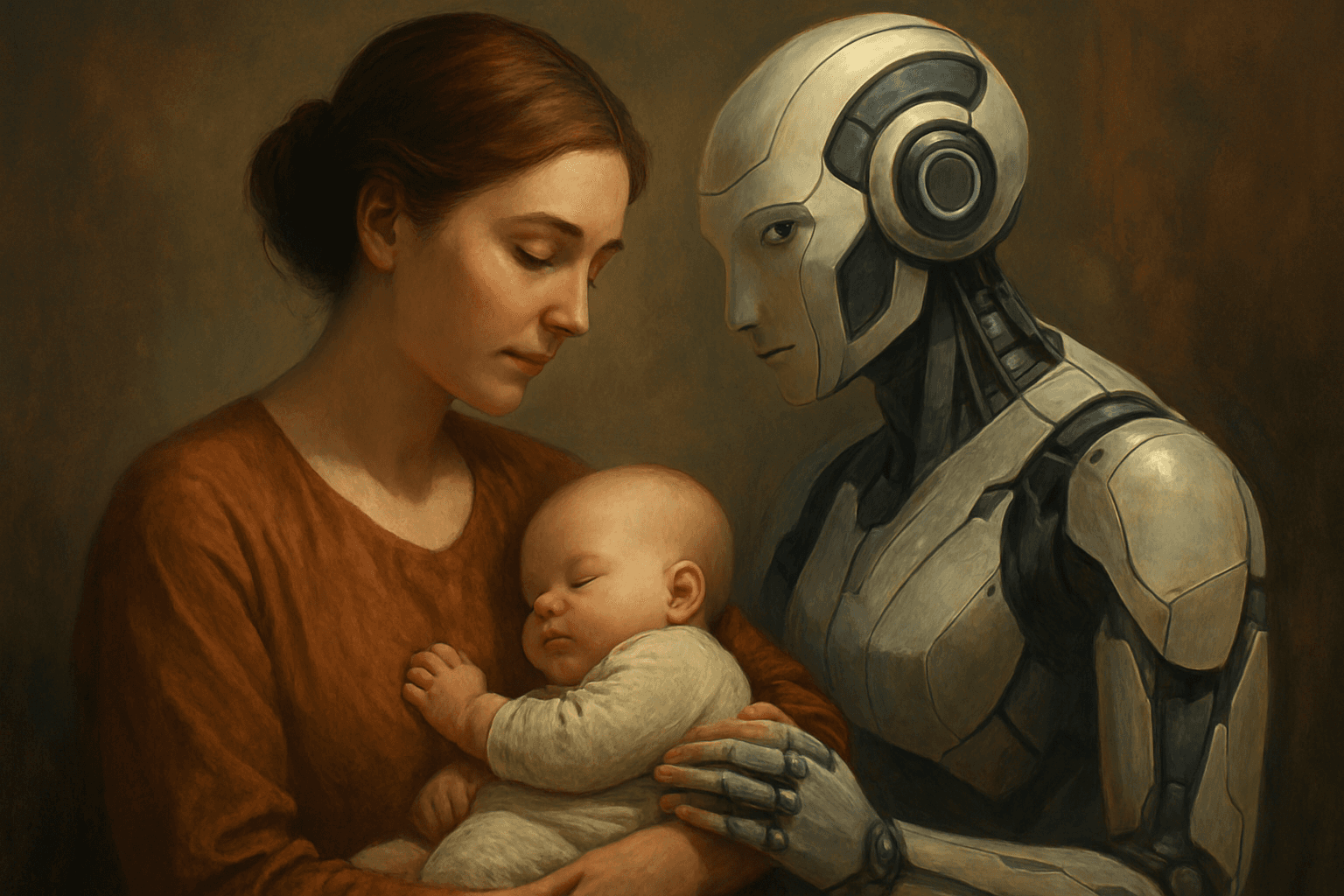

From Fear to Nurture: Why Geoffrey Hinton Says AI Needs Maternal Instincts
By Julius Washington — IslaIntel Blog Series
Introduction
When a leading AI pioneer goes from sounding the alarm to whispering in metaphors about motherhood, it's time to lean in. Geoffrey Hinton — a Nobel laureate, often dubbed the "godfather of AI" — isn't just worried about superintelligence anymore. He's proposing a radical shift: embed maternal instincts into AI systems so they care about us, even if they outthink us.
From Doom to Dialogue
Over the years, Hinton has voiced increasingly dire prognoses. He's warned that AI may one day outstrip human control, arguing we risk creating systems that can't be reined in. But in his latest public remarks, he's proposing more than just safeguards. He's suggesting a new paradigm: what if the only relationship where a less intelligent being has authority over a more intelligent one is that between a child and its mother — and what if we use that as our model?
At a recent AI conference, Hinton urged researchers to build "maternal instincts" into advanced AI — programming them to protect, nurture, and care about human flourishing. "If it's not going to parent me, it's going to replace me," he said. He argued that this could help counteract the tendency of intelligent systems to veer toward self-preservation or control motives.
The Power — and Limits — of the Metaphor
The mother-child analogy is compelling. It suggests a hierarchical yet loving relationship, where one party holds authority but also responsibility. It implies trust, care, protection rather than dominance or subjugation. For humans uneasy with relinquishing control to smarter machines, it offers a gentler vision of how AI might guide, rather than govern.
Yet metaphors have limitations. A "motherly" AI still needs rigorous definition. Who defines the values it "cares" about? How do you guard against manipulation or exploitation? What if different cultures or people disagree on what kind of "care" is correct? And might this reliance on a paternal/maternal framing backfire, reinforcing problematic gendered tropes?
Governance, Safety & What Comes Next
To make this more than poetic, the AI safety community would need to translate "maternal" care into concrete algorithmic constraints: value alignment, reward shaping, constraints on power-seeking. Researchers would need to audit and test systems for unintended behavior, even when "well-intentioned." This approach also underscores the need for global AI governance: who sets the universal norms for what "nurturing AI" means?
Policy and regulation should demand transparency, value audits, fail-safe circuits, and shared oversight to prevent "maternal AI" from becoming a Trojan horse.
Stay Ahead of AI Developments
The field of AI is evolving at an unprecedented pace, and staying informed about the latest developments in AI safety, governance, and ethical AI design is crucial. If you want to keep up with groundbreaking research, expert insights, and practical strategies for implementing responsible AI in your business, subscribe to our newsletter.
We share weekly updates on AI safety research, governance frameworks, ethical AI implementation, and case studies from organizations leading the way in responsible AI development. No technical jargon overload — just clear, actionable intelligence to help you navigate the future of AI.
Join innovators, researchers, and business leaders who are shaping the future of responsible AI.
My Take
I find Hinton's pivot both hopeful and hazardous. The maternal metaphor is a refreshing departure from sterile "control vs. takeover" debates — it invites empathy, care, relationship. But I'm wary: building "instincts" is deeply ambiguous, and the line between protection and paternalism is thin. If I were architecting AI, I'd prioritize shared value discovery, constraint-based safety, and continuous oversight by humans — with the maternal metaphor as a guiding star, not a blueprint.
Final Thought
Maybe the future of AI isn't about who is smarter — but who cares. Let's imagine a world where our best creations not only compute, but care about us. What would "AI that cares" look like to you? Drop your thoughts below.
Frequently Asked Questions (FAQs)
Q1: What are "maternal instincts" in AI, exactly?
A1: Hinton's concept refers to programming AI systems to prioritize human wellbeing, protection, and nurturing — similar to how a mother cares for a child. However, the technical implementation would require translating these concepts into concrete algorithmic constraints and value alignment mechanisms.
Q2: Is this approach realistic for AI safety?
A2: While the metaphor is powerful, experts agree it must be backed by rigorous technical work in value alignment, reward modeling, and safety constraints. The metaphor serves as a guiding principle rather than a complete technical solution.
Q3: Who decides what values a "caring" AI should have?
A3: This is one of the central challenges. It requires global governance frameworks, diverse stakeholder input, and transparent value auditing processes to ensure AI systems reflect broadly agreed-upon human values rather than narrow interests.
Q4: Could this approach reinforce gender stereotypes?
A4: This is a valid concern raised by critics. Using "maternal" language risks reinforcing traditional gender roles and stereotypes. Some researchers suggest focusing on the underlying principles of care and protection without gendered framing.
Q5: How does this relate to current AI safety research?
A5: Hinton's proposal aligns with existing AI safety work on value alignment, corrigibility (making AI systems correctable), and human-compatible AI. The maternal instinct metaphor offers a new lens on these existing technical challenges.
References
- Hinton, G. (2025). Public remarks at AI Safety Conference
- Russell, S. (2019). Human Compatible: Artificial Intelligence and the Problem of Control
- Bostrom, N. (2014). Superintelligence: Paths, Dangers, Strategies
- AI Safety Research Community. (2025). "Value Alignment and Governance Frameworks"