
AI Influencers: What Marketers and Storytellers Need to Know
At the end of the day, creators have always reinvented themselves with new tools—first it was cameras, then it was YouTube, then TikTok filters. Here's the thing: AI personas aren't just tools, they're full-blown characters. And whether you're a marketer, a storyteller, or someone managing a brand, ignoring them is like ignoring social media in 2009. You might still be fine for now, but the cultural wave is already building.
AI influencers aren't science fiction anymore. They're being tested on Instagram, piloted on TikTok, and quietly deployed by agencies looking for 24/7 content output. Some will be gimmicks. Some will be brands. A few will become cultural icons. The question is: how do you, as a creator or marketer, plug into this wave early?
What Exactly Is an AI Influencer?
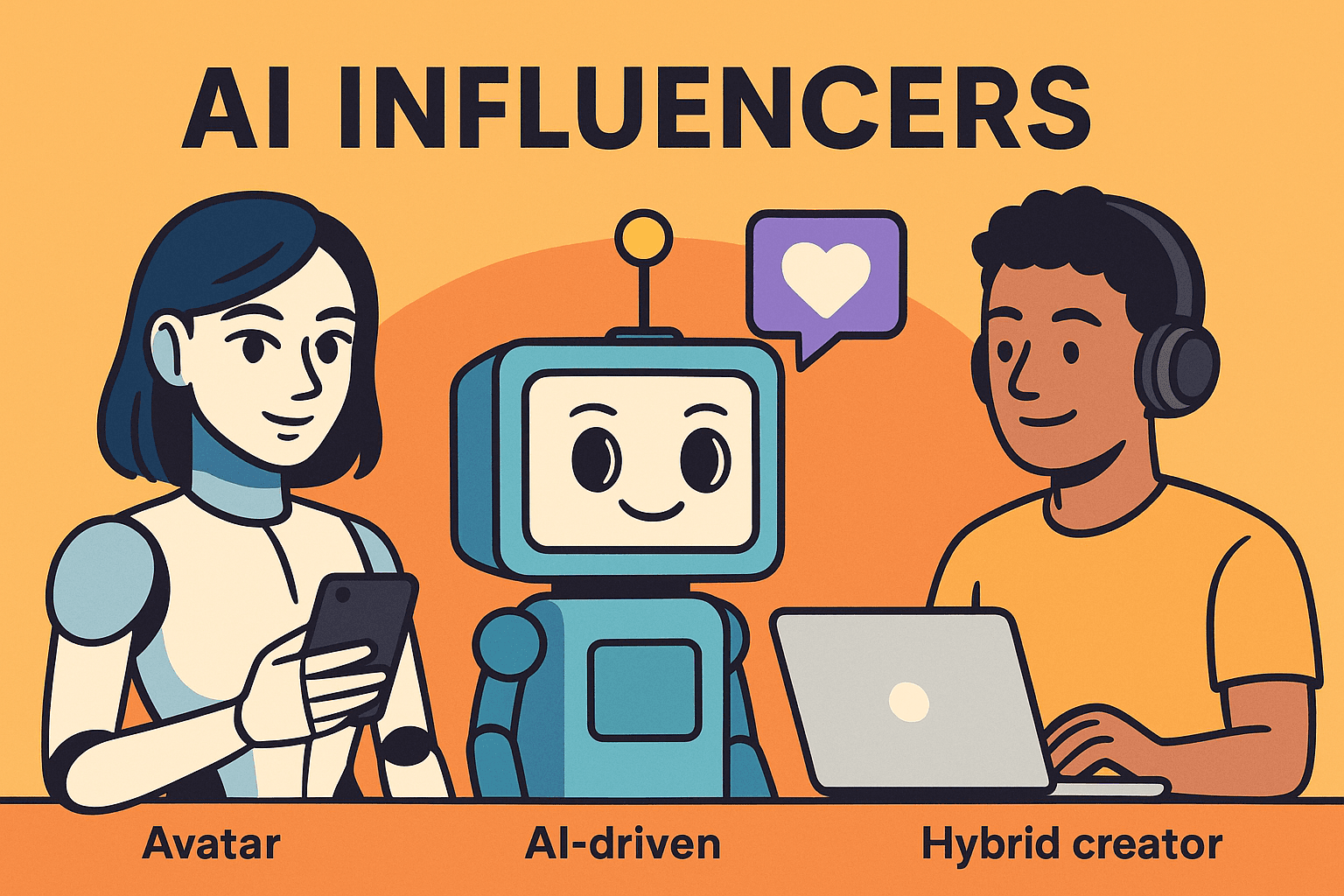
Let's be real—this term gets thrown around loosely. But in practice, AI influencers fall into three categories:
- Avatar shells: Human-controlled but AI-rendered. Think of them like digital mannequins that a creative team uses to run campaigns.
- AI-driven characters: Fully generated personas powered by AI tools. They can post, comment, and even evolve their storyline without a human behind every move.
- Hybrid creators: A human + AI blend, where the person is visible but the AI amplifies production—writing scripts, generating visuals, or extending reach into new platforms.
Each type has its place, but the real upside is in storytelling. If your persona has a narrative arc—like Pinocchio's "wanting to be human" motif—audiences don't just consume, they connect.
Capabilities vs. Limitations
Here's why AI influencers are catching traction:
Capabilities:
- Content at scale (thousands of posts, variations, and replies).
- 24/7 engagement across platforms.
- Endless experimentation with brand aesthetics and narratives.
Limitations:
- Authenticity is fragile. If the persona feels like a soulless bot, people check out fast.
- Current tools can't fully replicate emotional nuance in long-form video or live interaction.
- Narrative risk—if you don't build a coherent arc, the audience will sense the gap.
That tension—between scalability and authenticity—is where marketers need to play smart.
Tools and Frameworks You Can Use Today
You don't need to wait for Hollywood-level AI to get started. Right now, you can plug together:
- Video generation with Sora or Veo-style tools.
- Image and design with MidJourney, Runway, or Stable Diffusion.
- Agent workflows with n8n or A2A to schedule posts, handle DMs, or trigger campaigns.
- Storefront models where audiences can literally "buy in" to customize the persona (tattoos, outfits, backstory elements).
The stack is still messy, but that's the opportunity—early movers can shape the playbook while everyone else hesitates.
Opportunities for Marketers and Storytellers
If you're running campaigns or managing brands, here's where AI influencers can create upside:
- Brand collabs: You can match AI personas with specific products, freeing human creators from overextension.
- Story-driven campaigns: Think narrative arcs—like a fitness AI who trains for a digital "competition," or a fashion AI who evolves their style each season.
- Interactive engagement: Polls, comments, and storefront add-ons let audiences co-create, making the story stickier.
The magic isn't in the tech—it's in the story. If you can frame an AI persona with a clear journey, people will buy in emotionally.
Quick Wins You Can Try in 30 Days
- Prototype one persona using image/video gen + a simple voice agent.
- Run a 30-day experiment on TikTok or IG with consistent story beats.
- Compare engagement against your baseline human-only content.
Even if it flops, you've learned faster than 95% of the market.
Pitfalls to Avoid
Not gonna lie, there are some traps here:
- Overhyping the tech—if you sell the AI as "real," you'll lose trust.
- Ignoring skepticism—people will ask "why not just use real humans?" You need a clear answer.
- Treating it like a mascot—AI personas aren't static logos. They're characters that need growth, conflict, and payoff.
A 90-Day Playbook
If you want to take this seriously, give us 90 days.
- Day 0–7: Baseline your current engagement. Build a simple persona prototype.
- Days 8–30: Publish 2–3 posts per week. Stick to a narrative arc (origin story, challenge, or transformation). Collect feedback.
- Days 31–90: Scale the storyline. Add community polls, light storefront features, or brand collab experiments. Measure whether the AI content materially outperforms baseline. If it doesn't, pivot or exit cleanly.
That's how you de-risk—short horizons, clear metrics, no ego.
Closing Thought
Here's the simple version: AI influencers aren't here to replace human creators, but they're reshaping the playbook. The scalability is real. The storytelling potential is untapped. And the only real question is whether you test it before the market matures.
At the end of the day, the next 90 days are about experimentation. Prototype a persona, run a controlled test, and see where it lands. The future belongs to those who start building before everyone else catches up.
Want to Stay Ahead of the AI Marketing Curve?
The landscape of AI influencers and automated content creation is evolving rapidly. If you want to keep up with the latest strategies, tools, and case studies, subscribe to our newsletter. We share weekly insights on AI marketing, automation frameworks, and real-world implementations that are working right now.
No fluff. Just actionable intelligence to help you move faster than your competition.